
Amygdala Hijacking: Same Brain, Two Very Different Contexts
(or: Why “We need to talk” hits differently at work vs. at home)
I recently took one of those workplace classes.
You know the ones — the four colors, the personality quadrants, the “this explains everyone you’ve ever met” energy. I went in skeptical, mildly annoyed, and fully prepared to mentally fact-check the entire thing. Which I did. I even went down a rabbit hole pulling apart where the Insights language is outdated, lazy, or internally contradictory versus where it’s directionally right but poorly worded. (Yes, I asked AI to help translate it into something more precise. No, I don’t regret it.) ChatGPT’s assessment? “You weren’t nitpicking. You were doing model integrity review — very on brand for you.” Fair.
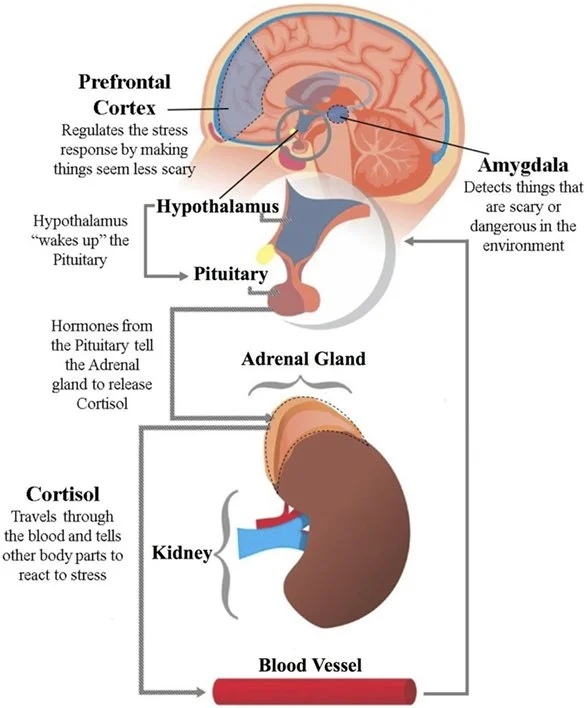
That said — plot twist — buried inside the color wheels and corporate gloss was something I actually found useful. Which is rare. And it had nothing to do with my “energy color” and everything to do with the neuroscience behind feedback, why our brains go feral when we hear certain phrases, and how models like SBIF (Situation, Behavior, Impact, Feed-forward) intersect with very real truth, relationship, and identity triggers. One part of the conversation stopped me mid-eye-roll — because it explained exactly why phrases like “we need to talk” light up our nervous system… and what we can do when we’re on the receiving end.

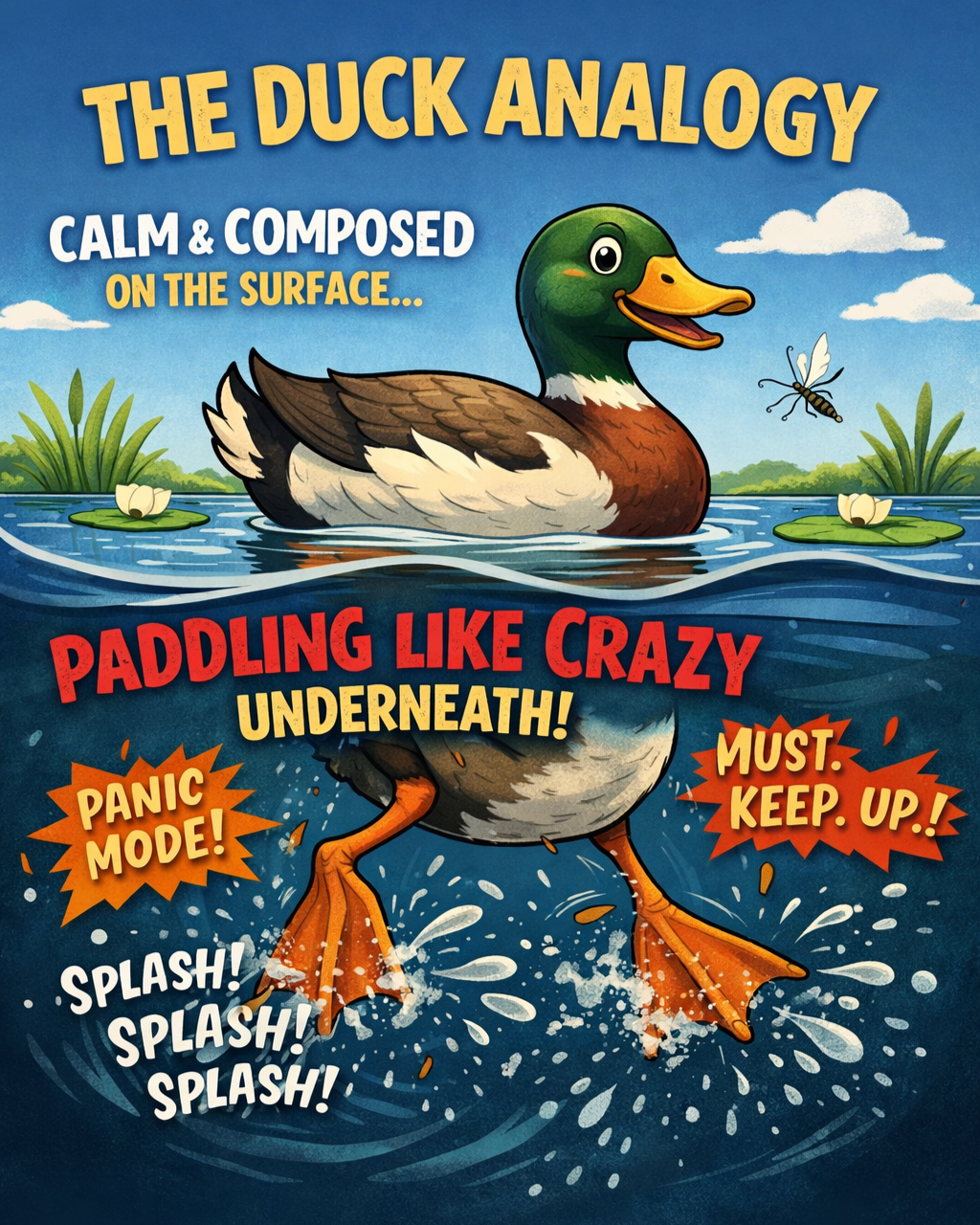
The instructor, who shared my love of analogies, told us about the duck analogy: calm above water, frantic paddling underneath. I hate most leadership metaphors, but this one earns its keep. Because yes — sometimes I am paddling like my life depends on it. But as a manager, I don’t get to splash that panic all over my team. My job is to be the duck: steady on the surface, doing the emotional regulation work privately, not outsourcing anxiety to others. The work is happening either way — the difference is whether your stress becomes visible and destabilizing to others. Leaders don’t eliminate pressure; they absorb and regulate it so their teams don’t have to.
Bottom line - Your brain doesn’t care where the message comes from.
Work. Home. Text. Slack. Carrier pigeon.
Vague = threat.
But how we handle that reality should change depending on the context.
So let’s talk about it from two lenses.
As a Manager at Work: “Do Not Weaponize Ambiguity”
Here’s the thing leaders often forget:
When you have positional power, your words carry weight you don’t feel.
You might type:“Can we talk?”
Meaning:“I have a quick question.”
Your employee reads: “I am about to be fired, criticized, or publicly shamed.”
That’s not sensitivity.
That’s biology.
What Amygdala Hijacking Looks Like at Work
Productivity drops instantly
People stop focusing on their actual work
They ruminate instead of preparing
Psychological safety takes a hit
All before the conversation even happens.
Better Manager Moves (Steal These)
Instead of:
“We need to talk”
“Call me”
“Can you hop on now?”
Try:
“Can we chat later today about project timing? Nothing urgent.”
“Quick sync on priorities — all good.”
“I have feedback on X; no surprises, just alignment.”
You are not softening the message.
You are removing unnecessary threat so people can stay regulated and present.
Leadership Truth
If your goal is clarity, performance, and trust —
don’t hijack someone’s nervous system first.
Calm brains do better work.
In Your Personal Life: “This Is Why Your Body Reacts Before You Think”
Now let’s talk about the personal side — where this hits harder.
Because here, the amygdala isn’t just scanning for professional risk.
It’s scanning for:
Rejection
Conflict
Abandonment
Emotional chaos
So when someone you care about texts:“We need to talk.”
Your nervous system goes:Oh. No. Not again.
Why It Feels So Intense
Past experiences matter here.
If you’ve lived through:
High-conflict relationships
Unpredictable communication
Emotional volatility
Or long stretches of “bad conversations”
Your brain learned: “Vague messages = danger.”
That reaction isn’t drama.
It’s conditioning.
How to Protect Your Nervous System
When you get the message:
Pause before responding
Don’t write the story for them
Ground yourself in facts (there are none yet)
Helpful internal scripts:
“I don’t have enough information to panic.”
“This is a message, not a verdict.”
“I can ask for clarity.”
And yes — it is reasonable to reply with:“Sure — is everything okay?”
That’s not weakness.
That’s regulation.
A Shared Responsibility (Work + Life)
Whether you’re a leader, partner, friend, or parent:
Clarity is kindness.
One extra sentence can:
Prevent anxiety
Build trust
Keep conversations productive
Stop unnecessary emotional spirals
Same brain.
Different context.
Same rule.
Don’t pull the fire alarm unless there’s actually a fire.
Your amygdala — and everyone else’s — will thank you.
And if all else fails, you can simply reply back with this funny website someone shared in class https://nohello.net/en/
